
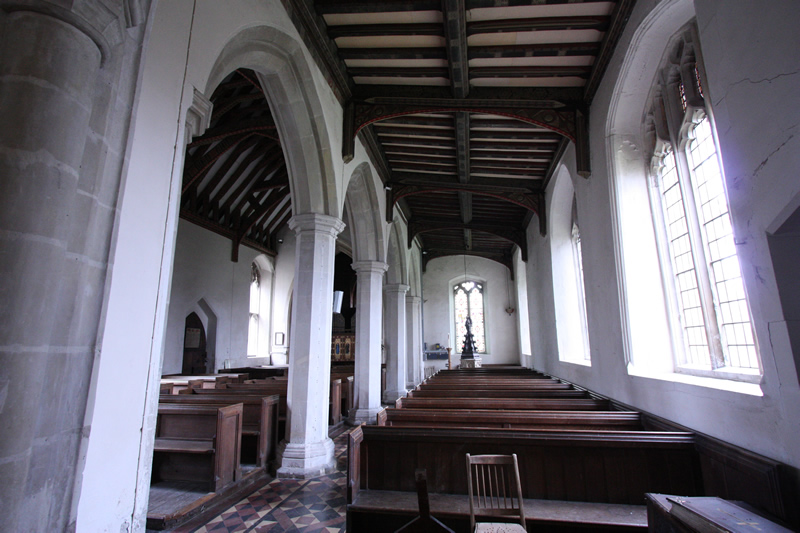
Some churches have aisles to either side of the nave or chancel. Many once housed chapels used by wealthy people or guilds.
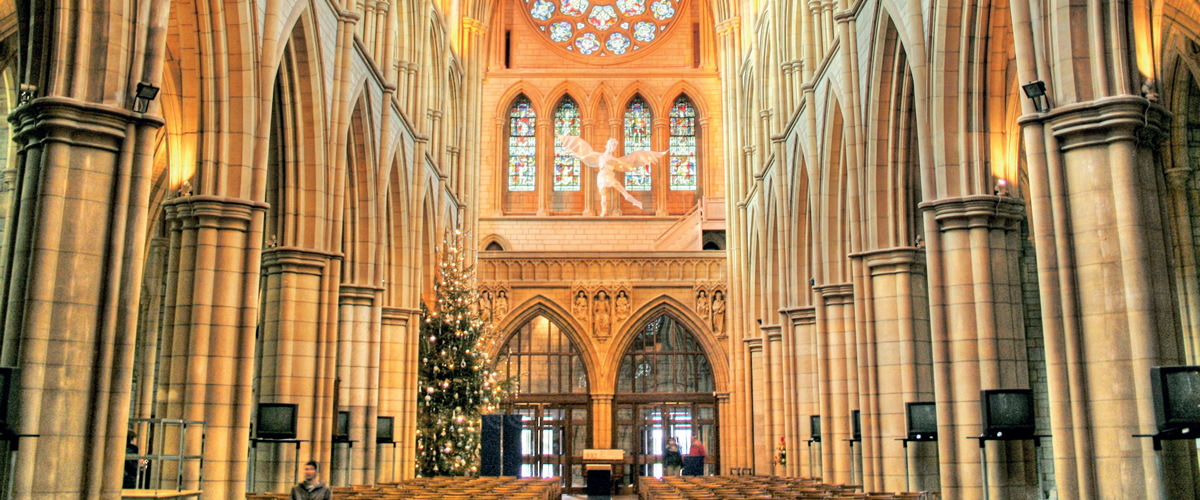
Some churches have aisles to either side of the nave or chancel. Many once housed chapels used by wealthy people or guilds.
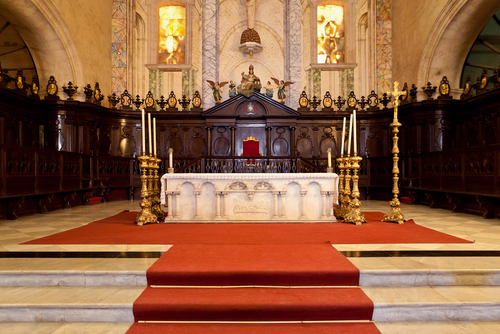
Churches usually have the altar in the east end, towards the rising sun, which symbolises the coming and resurrection of Jesus.

The chancel houses the altar, a table at the east end (though is many churches today this has been relocated to the east end of the nave, at the chancel step). Here the priest leads the sharing of bread and wine with the congregation in memory of Christ’s death on the cross.

Many churches have pews - fixed benches for the congregation to sit during services. These often feature decorative boards and some older examples, called ‘box pews’, have doors.
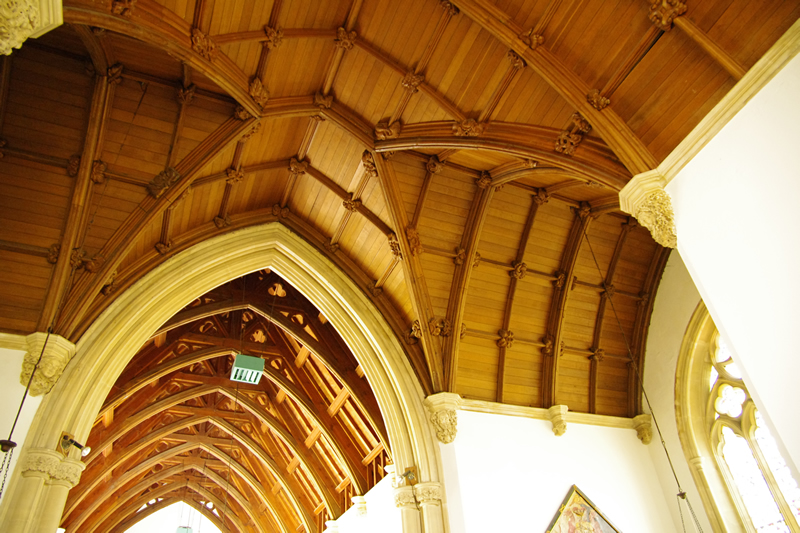
Churches built on a cross-shaped plan also have transepts , which form the ‘bar’ of the cross extending north and south.

Behind the altar, in many churches, is a reredos a painted or carved panel depicting some aspect of the life and death of Jesus.

The nave is the central part of the church where the congregation gathers both for services and for a variety of other community events.
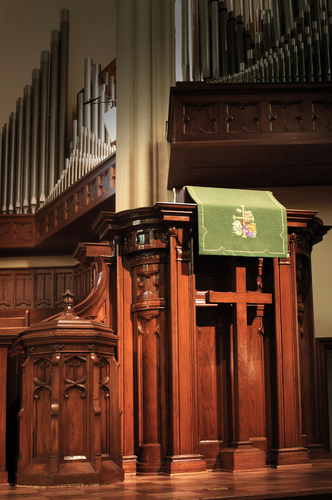
Within the nave is the pulpit , a raised platform for delivering the sermon or address during services.

The vestry is a room attached to a church which is used by the priest or choir as an office and for changing into ceremonial robes. This is usually inaccessible to the public.
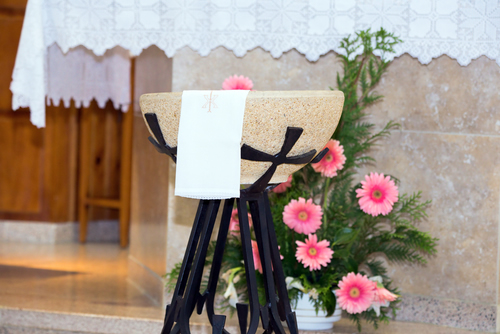
The font , traditionally located near the entrance, is the place of baptism, where newcomers to the faith (of all ages) are welcomed into the church with the pouring of water ‘in the name of the Father, the Son and the Holy Spirit’.

The lectern is a desk where the Bible is read aloud during services. They are often carved in the form of an eagle.

Towers are important local landmarks and often contain bells for ringing before a service and sometimes clocks. For much of our history they were the only way local people would have known the time.

The porch forms the entrance to the church and was the site of important religious services during the Middle Ages – including parts of the marriage service.

In many churches the chancel is separated from the nave by a screen . Medieval screens were topped by a ‘rood’, a figure of Christ on the cross.