
Holy Trinity, Cookham
The church was the setting for many of the artistic works by Stanley Spencer, such as ‘Resurrection’ which depicted the churchyard at the last judgement.
http://www.holytrinitycookham.org.uk/welcome.htm

Churches have been host to many astonishing events, from famous marriages to infamous murders, and this year ChurchDays is celebrating some of the most exceptional. The following churches were host to some extraordinary and surprising events, from plane crashes to royal corpses. You can follow the links to visit the church website or look it up on a map to find out how to get there.
The church was the setting for many of the artistic works by Stanley Spencer, such as ‘Resurrection’ which depicted the churchyard at the last judgement.
http://www.holytrinitycookham.org.uk/welcome.htm
In 1743 a large seizure of smuggled tobacco was made in the belfry, while a cask of ‘hollands’ (Dutch gin) was found under the vestry table. Many of the churches on Romney Marsh made good places for smugglers to hide contraband goods. It has been suggested that a painted galleon opposite one of the doors let smugglers know that the church was a safe hiding place.
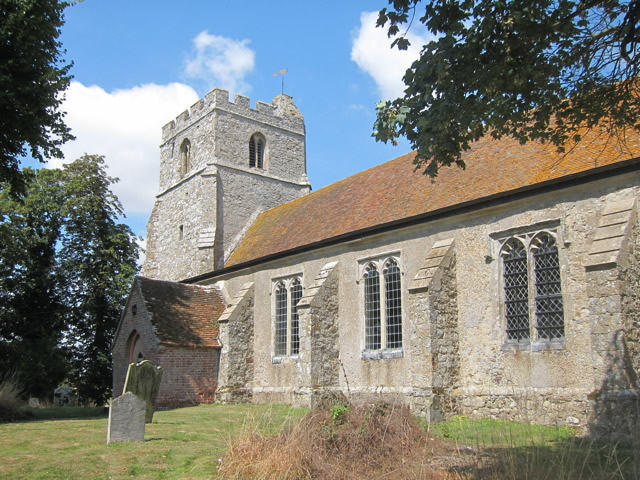
Alfred, Lord Tennyson set the opening of the Morte d’Arthur at St Bega, where he was staying in 1835: “The bold Sir Bedivere uplifted him, Sir Bedivere, the last of all his knights, And bore him to a chapel nigh the field…”

In 1216 St Mary's was burned by King John in revenge for Roger Bertram, one of the barons who had forced the King to sign Magna Carta the year before. Many of the villagers who had taken sanctuary in the church were still inside. It was damaged again when Alexander II of Scotland besieged the town in 1217.

The church was caught in cross fire during the besieging of nearby Elizabeth Castle and is believed to account for the lack of a steeple on its tower. In 1646 the future Kings Charles II of England and James II of England took refuge in Jersey during the English Civil War and attended services at the church. Additionally, the building was used during the German Occupation of Jersey by occupying forces as a garrison church.
The church was used to house Royalist prisoners after the civil war battle of Marston Moor in 1644. There is reputedly a ‘doodle’ of the defeated King scratched above the door.

Edward I died in Burgh-by-Sands in 1307 and was brought to the church to lie in state. He was on his way to fight Robert the Bruce after his victory at Loudon Hill.
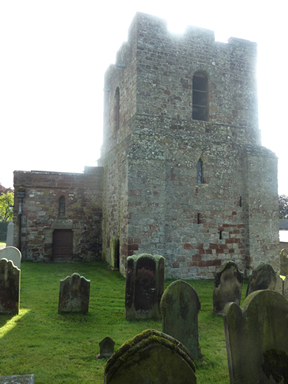
Revd Robert Walshe hanged on top of the tower 1549 after joining the widespread rebellions in the southwest of England against the new Book of Common Prayer, which replaced the traditional Latin Catholic rites with new services in English.
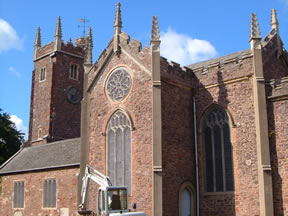
The churchyard where Thomas Gray wrote his ‘Elergy Written in a Country Churchyard’: The curfew tolls the knell of parting day/The lowing herd wind slowly o’er the lea/The ploughman homeward plods/his weary way/And leaves the world to darkness/and to me.
Tradition asserts that Margaret of Anjou (wife of Lancastrian Henry IV) was taken prisoner here after her defeat at the Battle of Tewkesbury 1471, one of the decisive battles of the Wars of the Roses.
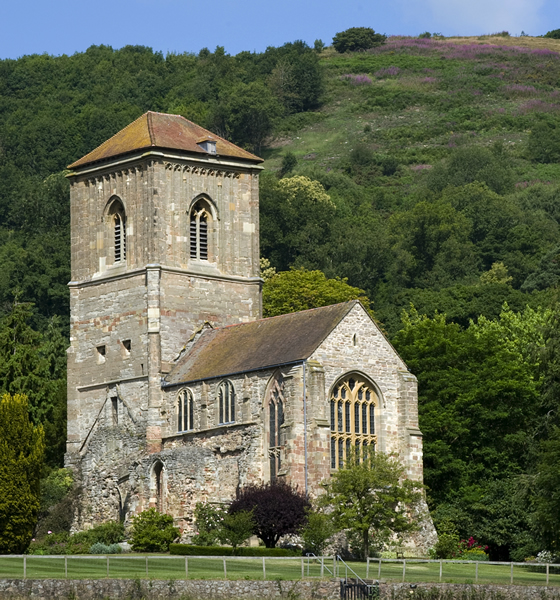
On 23 March 1918 a Royal Flying Corps aeroplane crashed into the church, demolishing the spire (and killing the pilot). He had apparently got lost and touched down to ask some boys for directions to Wyton Airfield.

The interior of All Saints, Breadsall, was severely damaged by fire on night of June 4th 1914, allegedly started by militant suffragettes. Mrs Wheeldon, a prominent figure in the movement from Derby, admitted the act to a friend but responsibility was never proven. It was not the only church fire allegedly started by suffragettes.
The Bayeux Tapestry shows King Harold Godwinson, who would later die at the Battle of Hastings, visiting Holy Trinity, Bosham, before setting out to Normandy in 1064. The voyage ended in disaster after Harold was shipwrecked at Ponthieu and taken as a hostage.
